毎度ありがとうございます。商売繁盛三島大社前「陶器のすぎうら」でございます。
御来店の際には、何なりとお気軽に当店店員までお声掛け下さいませ。
先ずは当ページームをご覧になって、ご不明の点はFAX、お電話にて気軽にお問い合わせ下さい。
連絡先 静岡県三島市大社町1-30 杉浦陶器店電話 055-975-0219 FAX 055-975-0237
白露の器選び

朝、庭の草に、小さな露が並んでいます。
九月のはじめ、二十四節気は白露に入ります。夜のあいだに空気が冷え、水蒸気が露となって結ぶ。その露が、朝日に白く光る。そんな景色から名づけられた節気です。
三島の朝も、少しずつ変わってきました。湧水の音が、夏よりも澄んで聞こえる気がします。庭先では虫の声。昼はまだ暑くても、朝と夕方には、秋の気配があります。
食卓も、静かに移りはじめる頃です。冷たい麺や冷やし鉢の出番が減り、汁物が恋しくなる。新米が届きはじめるのも、この季節。炊きたてのご飯から立つ湯気が、ふいに嬉しく感じられます。
白露という言葉から、白い器を思い浮かべる方もいるかもしれません。粉引の器は、白といっても真っ白ではありません。少し灰色がかった、やわらかな白。使ううちに、お茶やお料理の色をゆっくりと含んで、表情が変わっていきます。露をまとった朝の景色に、どこか似ています。
新米には、少し小ぶりの飯碗を。手のひらにおさまる大きさだと、ご飯の甘さがよくわかります。汁椀は、手に持ったときの温度が、夏の器とは違います。
湯呑みも、そろそろ厚みのあるものへ。ただ、冷茶用の薄手のグラスをしまうには、まだ早いかもしれません。しばらくは、両方を出しておく。そんな曖昧な時期も、この季節の楽しみです。
露は、日が高くなれば消えてしまいます。朝のうちだけの、短い白。
秋分までの十五日間。その移ろいを、器と一緒に。
Hakuro — Choosing Vessels in the Season of White Dew
In the morning, small beads of water sit along the blades of grass.
Japan divides the year into twenty-four short seasons, each about fifteen days long. They are called sekki (seasonal markers). In early September comes hakuro, written with the characters for “white” and “dew.” At night the air cools, and moisture gathers on grass and leaves. In the low morning light, those drops look white. The season takes its name from that sight.
Mishima, where our shop stands, is a town built on spring water. In September the sound of it seems clearer than in summer. In the evenings, insects sing. The afternoons are still warm, but morning and dusk belong to autumn now.
The table begins to shift as well. Chilled noodles appear less often. Soup starts to sound good again. This is also when shinmai — the first rice of the year’s harvest — reaches the shops. Steam rising from a bowl of freshly cooked rice becomes a small pleasure.
The word hakuro may bring white pottery to mind. Kohiki is a technique in which a dark clay body is coated with a white slip before glazing. The result is never a pure white. It is slightly grey, soft, a little uneven. With use, the surface takes in the color of tea and food, and changes slowly over the years. Not unlike a field of grass holding dew.
For new rice, try a smaller meshiwan — a rice bowl meant to be lifted in one hand while eating. When it sits in the palm, the sweetness of the rice is easier to notice.
A shiruwan, the lacquered wooden bowl used for soup, feels different from summer’s cold porcelain. Wood carries warmth to the hands rather than away from them.
Teacups, too, move toward thicker walls. Though it is still too early to put away the thin glasses used for chilled tea. For a while, keep both within reach. That in-between time is part of the season.
Dew vanishes once the sun climbs. A white that lasts only the early hours.
Fifteen days remain until shūbun, the autumn equinox. A short season of small changes — and vessels to meet them.
処暑の器選び
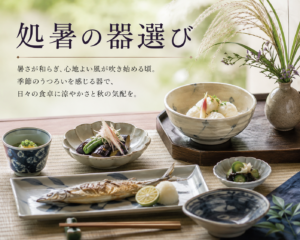
八月も、終わりに近づきました。暦の上では処暑。「暑さが処(や)む」と書きます。日中はまだ汗ばむ日が続きますが、朝と夕方の空気が、少しだけ違って感じられる頃です。
日が落ちるのが早くなりました。五時を過ぎると、光が斜めに傾きます。窓の外からは、蝉の声に混じって、虫の音。見上げれば、あの分厚い入道雲が、少しずつ薄く、高くなっていきます。
食卓も、ゆっくりと衣替えの時期です。とはいえ、急ぐ必要はありません。処暑の器選びは、「少しずつ混ぜる」のがコツだと思います。
たとえば、ガラスの器。夏のあいだ活躍した小鉢や豆皿を、まだしまわなくて大丈夫です。ただ、そこに一枚だけ、土の温かみのある器を加えてみる。粉引の白。飴釉の茶色。テーブルの上で、ガラスの涼しさと、土のぬくもりが並びます。その景色が、まさに今の季節そのものです。
そば猪口も、この時期に活躍します。冷たい麺のつゆを入れるのはもちろん、少し肌寒い朝には、そのまま湯呑みとして。デザートの器にも、小鉢にもなります。ひとつで何役もこなしてくれる器は、季節の変わり目にこそ頼りになります。
そして、そろそろ新米の便りが届く頃です。ご飯茶碗を、あらためて見直してみませんか。手にしたときの重さ。指のかかり具合。口をつけたときの、縁の薄さ。毎日使うものだからこそ、しっくりくるものを選びたい。炊きたてのご飯の白さが映える器は、それだけで食卓のごちそうになります。
秋刀魚が店先に並び始めたら、長皿の出番です。
暑さが行き、涼しさが来る。その途中の、どちらでもない時間。処暑の食卓は、その曖昧さを楽しむ季節なのかもしれません。
次回は「白露」。草に露が宿る頃のお話です。
Choosing Vessels for Shosho
Late August. In the old Japanese calendar, this is Shosho — written with characters meaning “the heat settles down.” The afternoons still bring sweat, but the air at dawn and dusk has begun to feel different.
The sun sets earlier now. After five o’clock, the light falls at an angle. Beyond the window, cicadas are joined by the first singing insects. Overhead, the thick summer thunderheads are thinning, drifting higher.
The table changes too — slowly. There’s no need to rush. The trick, I think, is to mix rather than to switch.
Keep the glass bowls and small glass plates that carried you through summer. Simply add one piece of clay alongside them. The soft white of kohiki, a slip-coated stoneware. The amber brown of a caramel glaze. Cool glass and warm earth, side by side on the table — which is exactly what this season is.
The soba choko earns its place now as well. A cup traditionally used for dipping sauce with cold noodles, it becomes a teacup on a cool morning, a dessert bowl in the evening, a small serving dish at dinner. A vessel that plays many roles is a comfort when the seasons are turning.
And soon, word of the year’s new rice arrives. It may be a good moment to look again at your rice bowl. The weight in the hand. Where the fingers rest. The thinness of the rim against the lip. Something used every day deserves to feel right. A bowl that sets off the whiteness of freshly cooked rice is a small luxury in itself.
When sanma — Pacific saury — appears at the fishmonger, the long oval plate has its turn.
The heat departing; the cool not yet arrived. Shosho is the in-between, and its table is a place to enjoy that uncertainty.
Next time: Hakuro, when dew begins to settle on the grass.